
Printed and flexible electronics research is moving beyond simple conductive tracks towards computation, sensing and intelligence on thin, conformable substrates.
Source date: 2025-2026 Primary organisation: Printed and flexible electronics research community
Beyond the printed circuit
Printed electronics is often discussed in terms of replacing wires, switches or individual sensors. Research reviewed in 2025 points towards a broader possibility: computation itself on mechanically flexible, low-cost substrates.
Why form factor matters
Flexible electronics can conform to surfaces that conventional rigid PCBs cannot. That creates opportunities in trim, packaging, wearables and large-area sensing where the electronics need to follow the product rather than dictate its shape.
The intelligent surface
Combine printed conductors, sensing, simple computation and thin illumination and the surface begins to behave as a system. A door trim could potentially detect touch, process a local input and provide visual feedback without a conventional switch module behind it.
The hard problems remain
Reliability, memory, device integration, manufacturing yield and environmental protection are still significant barriers. Automotive use raises the bar further because flexible electronics must survive temperature cycling, humidity, vibration and long lifetimes.
The Lux View
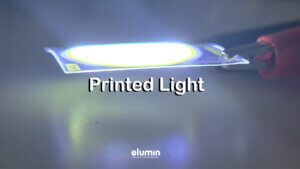
Printed light is only one part of a larger shift. The more interesting destination is a surface that carries its own sensing, logic and illumination – turning trim from passive decoration into distributed electronics.
Publishing information
Source and research links
Computing with Printed and Flexible Electronics – arXiv
https://arxiv.org/abs/2505.00011