
BMW’s latest 3 Series links illuminated grille contours, rear signatures and cabin lighting into a
coordinated arrival experience.
Source date: 20 October 2026 | Status: Production vehicle

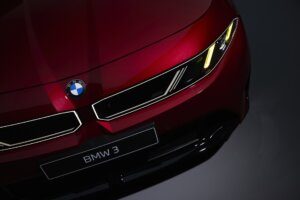
A familiar shape, expressed in light
BMW’s new 3 Series applies the Neue Klasse design language to one of the brand’s most recognisable models. The kidney grille and twin-headlamp graphic now read as a continuous visual composition, with light used to define the front end rather than simply illuminate the road. BMW says optional Iconic Exterior Illumination traces the kidney contours and adds visual depth. The treatment is included as standard on M Performance derivatives, making the light signature part of the trim hierarchy as well as the design language.
An arrival sequence, not just a lamp
The most tangible customer-facing feature is the coordinated Welcome Light Animation. As the driver approaches, the car runs a sequence that begins outside and continues inside the cabin. BMW describes three selectable exterior effects — Balanced, Relaxed and Excited — with welcome and goodbye presentations dependent on specification. This is a relatively simple proposition to understand: the car recognises its owner and responds with a chosen visual character. The lighting does not need a large display or complex projection to make the interaction feel deliberate.
Why continuity matters
Car makers have offered puddle lamps and entry illumination for years, but the 3 Series shows a more integrated approach. The exterior signature, illuminated brand elements and cabin atmosphere can be considered parts of one experience rather than separate features supplied by unrelated systems. For designers, the difficult work lies in timing, colour consistency and transitions. A convincing sequence must look intentional from different approach angles, in daylight and at night, without making the car seem to flash unnecessarily in a crowded car park.
A platform for personalisation
BMW’s three named effects suggest a manageable level of choice. That may prove more commercially effective than offering dozens of animations that owners rarely revisit. Selectable lighting can distinguish equipment grades, reinforce performance variants and give software teams a controlled canvas for new experiences. It also creates a clear boundary: lighting intended for arrival and departure is different from mandatory road-use signalling, where recognisability and compliance must take precedence over customisation.
The rear has a role too
BMW says the new 3 Series uses a broad, horizontal rear-light composition with a three-dimensional interpretation of its traditional L-shaped motif. That matters because modern vehicle identity is increasingly established from both directions, especially in night-time traffic. A signature that works from the front but disappears into a generic light bar at the rear weakens the brand effect. The new treatment aims to preserve BMW recognition while moving away from older lamp geometries.
What to watch next
A useful next step will be to compare the animations on a real car in different lighting conditions and establish which variants receive each effect. The degree of coordination between exterior and interior lighting is best judged on video or in person, not from a still photograph. Owners may also have different expectations about whether the selected effect should persist across profiles, keys and software updates. Those details determine whether personalisation feels polished or merely configurable.
The Lux View
The BMW story is about choreography rather than component novelty. Lighting now marks the transition from approaching the vehicle to entering and driving it, while reinforcing model identity and trim differentiation. For suppliers, the opportunity is not simply to sell a brighter lamp; it is to deliver a consistent, validated experience across surfaces, control systems and vehicle variants.
Publishing information
Source and research links
https://newsroom.bmwgroup.com/americas/en-ca/the-new-bmw-3-series_20261020095103742/