
Panasonic Avionics says its Astrova platform has reached 500,000 screen sales and expanded factory capacity sixfold. OLED is becoming part of the airline’s long-life digital infrastructure.
AEROSPACE / OLED DISPLAYS / SOURCE DATE: 23 October 2026
A display milestone with an industrial consequence
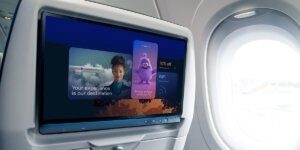
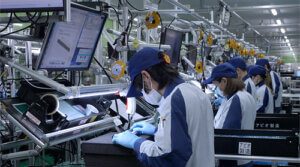
Panasonic Avionics announced on 23 October that sales of its Astrova 4K OLED in-flight entertainment screens have reached 500,000 units. More than 45 airlines have selected the platform across over 150 aircraft installation programmes since its 2022 launch. The headline figure includes screens already flying and screens still moving through integration and delivery; it should not be read as half a million installed seats. The company has also completed a major expansion of its Osaka-Kadoma manufacturing site. It says Astrova production capacity has increased sixfold, the factory now exceeds 10,000 square metres and equipment capacity has doubled. This is the more consequential part of the announcement. It indicates that OLED seatback displays are no longer being treated as a small premium trial, but as a product family requiring industrial scale and long-term support.
Why an airline buys a platform
A passenger may see the difference between an OLED and an LCD in black levels, contrast and perceived picture quality. An airline sees a more complicated proposition: mass, power, reliability, replacement intervals, content compatibility, serviceability and the useful life of an aircraft cabin. The same seat can remain in service while consumer devices change several generations.
Astrova’s design therefore places modularity alongside its HDR10+ OLED screen. Panasonic says processors, memory, Bluetooth and USB capabilities can be upgraded as passenger expectations change. That separation between the visible display and the refreshable electronics is important. It allows an airline to invest in a durable physical cabin installation without assuming that every connected feature will remain competitive for the entire refurbishment cycle.
The economics of engagement
Panasonic describes the seatback as a digital engagement channel rather than a passive television. The company cites a study covering 1,400 flights and more than 400,000 passengers in which Astrova-equipped aircraft showed an 18% improvement in passenger engagement. The release does not establish whether the comparison isolates the screen from differences in content, routes, cabin classes or connectivity, so the result should be attributed to Panasonic rather than treated as a universal OLED effect. Even so, the commercial logic is clear. Better displays, personal-device connectivity and faster internet can give airlines more ways to present entertainment, services and offers. The seatback becomes an interface for the airline brand as well as a product that passengers judge directly.
Lessons for automotive interiors
There is a useful parallel with the vehicle cockpit. Car manufacturers also face a mismatch between long mechanical product cycles and fast-changing digital expectations. Screens must operate in difficult environments, integrate with other electronics and remain repairable after the original platform launch. The aviation approach makes the lifecycle question explicit because certification and cabin modification are expensive.
The growth of OLED in aircraft does not mean every cockpit or passenger display should adopt it. Brightness, burn-in risk, thermal performance, reflection control and the economics of spare parts still matter. But the scale of the Astrova programme makes OLED a mainstream procurement option for a sector known for cautious qualification.
The Lux View
The interesting story is not simply that an OLED screen looks better at 35,000 feet. It is that the display, software and connectivity are being sold as a maintainable architecture. Automotive suppliers pursuing ever-larger screens or illuminated smart surfaces should pay attention: a compelling first impression wins the design review, but a credible upgrade and service strategy wins the lifecycle argument.
Publishing information
Source and research links